My Pay My Card UAE: Balance Check, Activation, Fees and WPS Charges
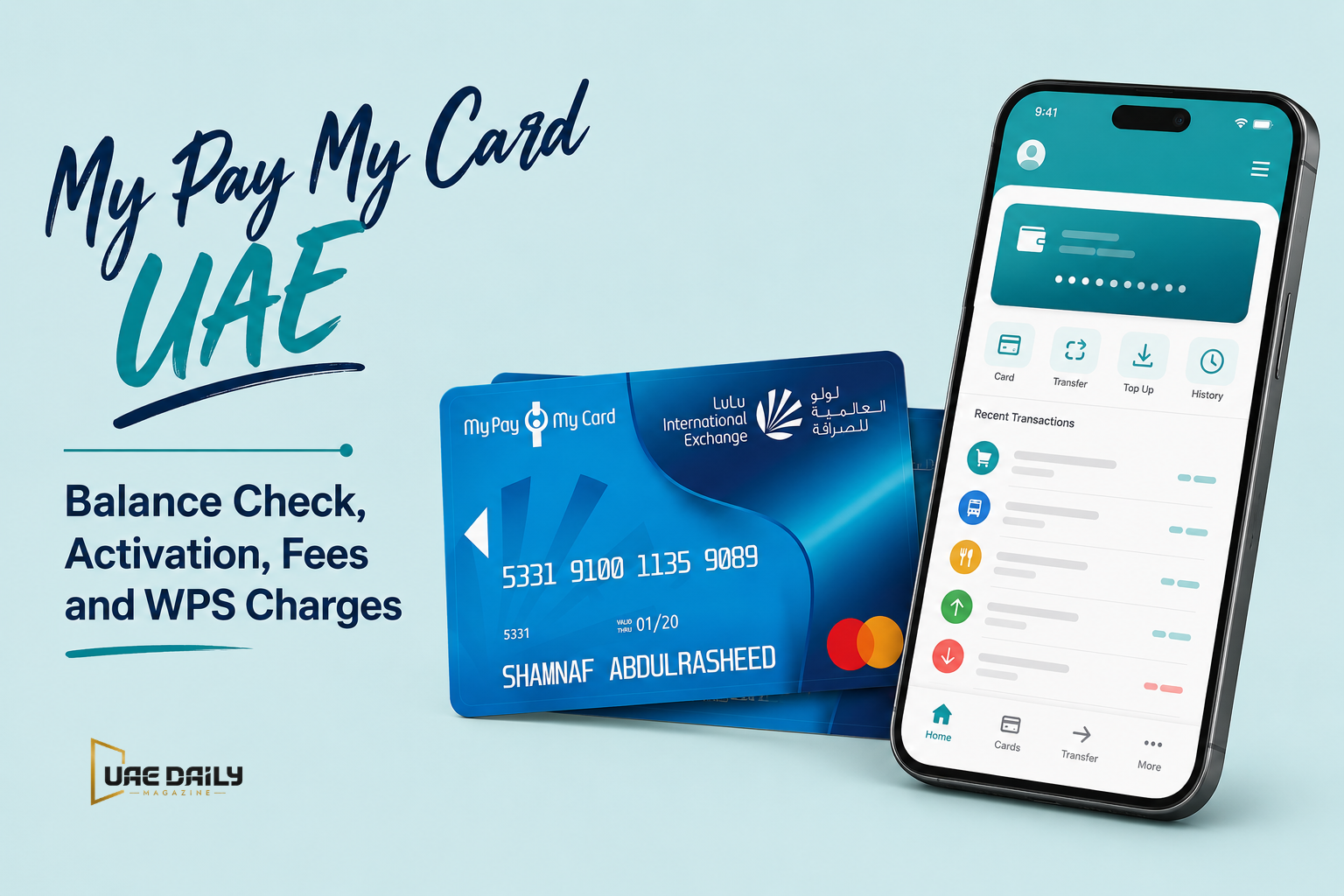
If your salary lands in a My Pay My Card, the card does the job a bank account normally does. It holds your wages, lets you withdraw cash, and sends money home. It doesn’t come with a clear fee sheet, which is why so many online guides quote numbers nobody can trace back to the issuer. This guide separates what LuLu Exchange actually publishes from what circulates online.
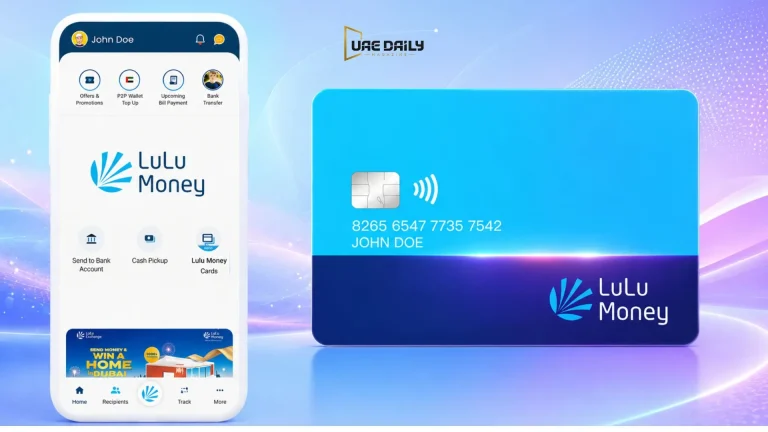
My Pay My Card, officially written as MyPay: MyCard, is a WPS payroll solution from LuLu Exchange. It lets employers pay wages to employees who don’t hold a personal bank account, under rules set by MOHRE and the Central Bank of the UAE. Balance checks, withdrawals and international transfers run through LuLu Exchange branches and the LuLu Money app.
Fees and card rules were last verified in August 2026 against LuLu Exchange’s official Key Facts Statement.
What My Pay My Card Actually Is
The name confuses people. It gets written three different ways. Search results show “my pay my card”, “mypay my card”, and “MyPay MyCard”. LuLu Exchange writes it as MyPay: MyCard in its own documentation.
All refer to the same thing: a payroll product for corporate entities and their employees, designed to comply with the Wage Protection System. The Ministry of Human Resources and Emiratisation enforces that system, working with the Central Bank of the UAE.
The point is access. Many workers arrive in the UAE without the documents or salary threshold a bank requires. Payroll still has to reach them legally and on time. The card solves that.
Think of a warehouse packer in Jebel Ali whose employer runs payroll through LuLu Exchange. He has no current account, no cheque book, and no minimum balance to maintain. On payday, the wages land on his card, and he can withdraw them the same hour.
MyPay: MyCard vs LuLu Money Card
This trips up almost everyone, including the guides that rank for this term.
LuLu Exchange’s own Key Facts Statement lists two salary cards under its WPS service:
- MyPay: MyCard
- LuLu Money Card
They are separate products. Most articles treat them as one. That is where wrong instructions come from. Someone following LuLu Money Card steps with a MyPay: MyCard in hand will hit a dead end and assume they’ve done something wrong.
Check the name printed on your own card before following any guide, including this one. If yours says LuLu Money Card, our Lulu salary check guide covers that product instead.
How to Check Your My Pay My Card Balance
Three routes are available. Which one suits you depends on what you can access.
The LuLu Money app is the primary interface for most cardholders. It shows your available balance and recent transactions in one place, and it’s the only method that works without leaving your seat.
LuLu Exchange branches handle counter enquiries. The network runs to more than 140 branches, and cardholders get unlimited cash withdrawals across them.
ATMs work too, though fee claims get murky here. See the fees section below before assuming balance enquiries are free.
Switch on card alerts too. LuLu Exchange includes unlimited debit and credit alerts with the card, which means you get a message when your salary lands rather than checking the app repeatedly on payday.
Activating Your Card
You must activate the card before it will work. It isn’t automatic when you receive it. LuLu Exchange says activation happens through a secure, validated process, with instructions provided alongside the issued card. That wording matters, because the exact steps vary by card version and employer arrangement. Your welcome letter is the authority here, not a blog post.
Once activated, keep your PIN private. The terms are clear on this point: cardholders must keep their PIN and security details confidential, and unauthorised access caused by negligence can affect what the cardholder is liable for. Sharing a PIN with a colleague to collect cash on your behalf makes you responsible for any loss.
Fees and WPS Charges
This is where the official document and the internet part ways.
What LuLu Exchange publishes
The Key Facts Statement sets out WPS processing charges. These fall on the employer, not the employee, which is why they never appear in guides written for workers.
| Charge | Who pays | Maximum |
| Per file processed | Employer | AED 50 |
| Per month (first file each month) | Employer | AED 50 |
| Per year (first file after renewal) | Employer | AED 250 |
| Per employee salary record | Employer | AED 5 |
All figures exclude VAT, and LuLu Exchange notes they vary by customer, number of employees, and other factors. Treat them as ceilings, not fixed prices.
For a company running payroll for 30 staff, that’s a possible AED 150 in salary record charges plus the monthly file fee, before VAT. Small operations setting up WPS for the first time rarely see these numbers before signing.
One employee-side figure is published: international transfers through LuLu Exchange carry an AED 8 service charge for cardholders. The card also includes insurance coverage.
What we can’t verify
Several fee figures circulate widely and appear in most competing articles. None of them appears in LuLu Exchange’s Key Facts Statement:
- AED 2 plus VAT for withdrawals at non-FAB ATMs
- Free withdrawals at FAB ATMs
- Around AED 15 for a replacement card
- A daily ATM withdrawal cap of AED 5,000
- Operation on the Mastercard network
- A formal partnership with First Abu Dhabi Bank
Some or all of these are accurate. The point is that no primary source confirms them, and the guides quoting them hedge with words like “usually”, “around” and “typically” rather than citing anything.
Ask LuLu Exchange directly before planning around any of these numbers. A branch visit or a call settles it in minutes, and your welcome letter may list your specific card’s fees.
Withdrawal and Spending Limits
Daily withdrawal and spending limits apply to the card. LuLu Exchange confirms this in its terms but does not publish the amounts, which vary by card version and employer arrangement.
That absence matters. A driver planning to withdraw a full month’s salary in one visit to pay rent in cash could find himself capped and short on the day it’s due. Find out your own limit before you need it, not while standing at the machine.
Using the Card Outside the UAE
The card works abroad. There are conditions. Transactions outside the UAE attract applicable conversion rates plus usage fees, set by the card issuer and by the bank in the country where the card is used. Two separate charges, from two separate parties, neither published in advance.
For anyone travelling home on annual leave, sending money through LuLu Exchange at the AED 8 service charge is usually more predictable than withdrawing cash overseas and absorbing unknown conversion costs.
If Your Card Is Lost or Stolen
Report it immediately. LuLu Exchange treats prompt reporting as mandatory. The cardholder carries responsibility for flagging unauthorised transactions.
Delay is the expensive part. A card lost on Friday and reported on Monday leaves a window where transactions may not be covered, and that gap is on the cardholder rather than the issuer.
What to Watch Out For
A few things deserve more attention than they get.
Fee figures from blogs, including specific dirham amounts. As covered above, most published fee numbers for this card have no traceable source. Your welcome letter and a LuLu Exchange branch are the only reliable references.
Terms can change without direct notification. LuLu Exchange reserves the right to amend terms and conditions, including fees, and communicates changes through its website, branch disclosures, or electronic channels. Nobody is obliged to call you. Check the website occasionally rather than assuming today’s terms are permanent.
The Key Facts Statement you signed. You get it at registration, and signing the counter receipt confirms you received and understood it. Most people sign without reading. If you still have it, keep it. That document beats every guide online, including this one.
Don’t treat the card as a bank account. No cheque book, no overdraft, no credit facility. It holds wages and lets you spend them. That’s the extent of it.
For the record, this site doesn’t sell financial products, take bank advertising, or earn commission on any card mentioned. Links here go to LuLu Exchange’s own documentation so you can check the source yourself.
How It Compares to Other UAE Salary Cards
Most WPS salary cards in the UAE solve the same problem in slightly different ways, and the differences show up in access rather than headline features.
Bank-issued cards like the FAB Ratibi card route balance enquiries through a bank portal. Exchange-issued cards like MyPay: MyCard lean on branch networks and their own apps instead. Neither approach is better in the abstract, though the branch network matters more if you live somewhere with poor mobile data or share a phone.
If you’re comparing across several cards, our prepaid card inquiry guide covers the balance-check method for each of the main UAE salary cards in one place.
Frequently Asked Questions
What is My Pay My Card?
My Pay My Card, officially MyPay: MyCard, is a WPS payroll solution from LuLu Exchange that lets employers pay wages to employees without personal bank accounts. It operates under Wage Protection System rules enforced by MOHRE and the UAE Central Bank.
How do I check my My Pay My Card balance?
Use the LuLu Money app for instant balance and transaction history, or visit any of LuLu Exchange’s 140-plus branches. You can also enable card alerts, so you receive a message whenever your salary is credited.
Is My Pay My Card the same as the LuLu Money Card?
No. LuLu Exchange’s Key Facts Statement lists them as two separate salary cards under its WPS service. Check the name printed on your card before following instructions written for either one.
What does My Pay My Card cost?
WPS processing charges fall on the employer, capped at AED 50 per file, AED 50 monthly, AED 250 annually and AED 5 per employee salary record, all excluding VAT. Employee-side ATM and replacement fees are not published, so confirm them directly with LuLu Exchange.
Can I use My Pay My Card outside the UAE?
Yes, but transactions abroad attract conversion rates plus usage fees charged by both the card issuer and the bank in the country of use. Neither amount is published in advance.
What happens if I lose my card?
Report it to LuLu Exchange immediately, since prompt reporting is mandatory and you remain responsible for reporting unauthorised transactions. Visit a branch with your Emirates ID to arrange a replacement.
Before You Rely on Any Fee Figure
Find your welcome letter. It came with the card; it lists the terms that apply to your specific version, and it will answer more questions than any guide can.
If it’s gone, a single visit to a LuLu Exchange branch gets you the current fee schedule and your withdrawal limit in writing. Ten minutes there beats guessing from numbers that nobody can source.